
Why Proper Heating is Critical for Poultry Farms
Why Proper Heating is Critical for Poultry Farms

Why Proper Heating is Critical for Poultry Farms
Maintaining the correct temperature inside poultry houses is one of the most important factors in successful poultry production. Proper heating directly affects bird health, growth performance, feed conversion, and overall farm profitability.
Modern poultry farms rely on efficient and reliable poultry heating systems to create a stable environment, especially during the brooding period and cold seasons.
For a complete overview of poultry heating technologies and system selection, you can also read our complete guide to poultry house heating systems.
Why Temperature Control Matters in Poultry Farming
Chickens are highly sensitive to environmental temperature changes. During the first days of life, chicks are unable to regulate their body temperature effectively. As a result, they depend entirely on the heating conditions provided inside the poultry house.
If the temperature drops below recommended levels, birds may experience cold stress. This leads to crowding behavior, uneven growth, reduced feed intake, and increased mortality risk.
On the other hand, overheating can cause dehydration, respiratory stress, and poor performance.
Stable heating helps poultry farms achieve:
-
Consistent bird growth
-
Better flock uniformity
-
Reduced mortality rates
-
Improved animal welfare
Impact of Heating on Feed Conversion Ratio
Feed conversion ratio (FCR) is one of the most critical performance indicators in broiler production. Poor temperature control can significantly reduce feed efficiency.
When birds are exposed to cold conditions, they consume more feed simply to maintain body temperature rather than for growth. This increases production costs and reduces profitability.
Efficient poultry house heating systems help maintain optimal temperatures, allowing birds to convert feed into body mass more effectively.
Bird Health and Disease Prevention
Temperature fluctuations can weaken the immune system of poultry flocks. Cold stress often leads to increased susceptibility to respiratory diseases and infections.
Maintaining proper heating conditions supports:
-
Strong immune response
-
Lower disease incidence
-
Reduced veterinary costs
Uniform heat distribution is especially important. Cold spots inside poultry houses can cause birds to cluster together, increasing stress levels and the risk of health problems.
Heating Technologies Used in Poultry Farms
Different poultry farms require different heating solutions depending on farm size, climate conditions, and fuel availability.
Gas Forced-Air Poultry Heaters
Gas-powered forced-air heaters are widely used in large commercial poultry houses due to their high heating capacity and fast heat distribution. These systems can operate using natural gas or LPG and are ideal for maintaining stable temperatures in large broiler houses.
For example, modern gas poultry heaters such as forced-air systems are designed to provide efficient and uniform heating performance in demanding farm environments.
Diesel Poultry Heating Solutions
In regions where natural gas infrastructure is unavailable, diesel-powered poultry heaters provide a reliable alternative. These systems offer strong heating output and independent fuel supply, making them suitable for remote poultry farms.
Diesel heaters are often preferred in off-grid locations where continuous heating reliability is essential for flock performance.
Electric Poultry Heaters
Electric poultry heaters are commonly used in smaller poultry houses or as backup heating systems. They provide clean operation, simple installation, and low maintenance requirements.
Electric heating can also support temperature stability during transitional seasons or emergency situations.
Common Heating Problems in Poultry Houses
Many poultry farms face heating-related challenges that negatively impact bird performance.
Typical problems include:
-
Incorrect heater capacity selection
-
Poor insulation causing heat loss
-
Uneven heat distribution
-
Inadequate maintenance of heating equipment
-
Improper heater placement
Addressing these issues helps farms improve temperature control and reduce operational costs.
Improving Heating Efficiency in Poultry Farms
To ensure optimal heating performance, poultry producers should focus on both equipment selection and environmental management.
Key strategies include:
-
Choosing properly sized poultry heaters
-
Improving building insulation
-
Ensuring uniform airflow distribution
-
Performing regular heater maintenance
-
Monitoring temperature levels continuously
Efficient heating solutions help poultry farms maintain stable environmental conditions while reducing fuel consumption.
Reliable Heating Solutions for Modern Poultry Farms
Modern poultry production requires heating systems that can operate efficiently under varying climatic conditions.
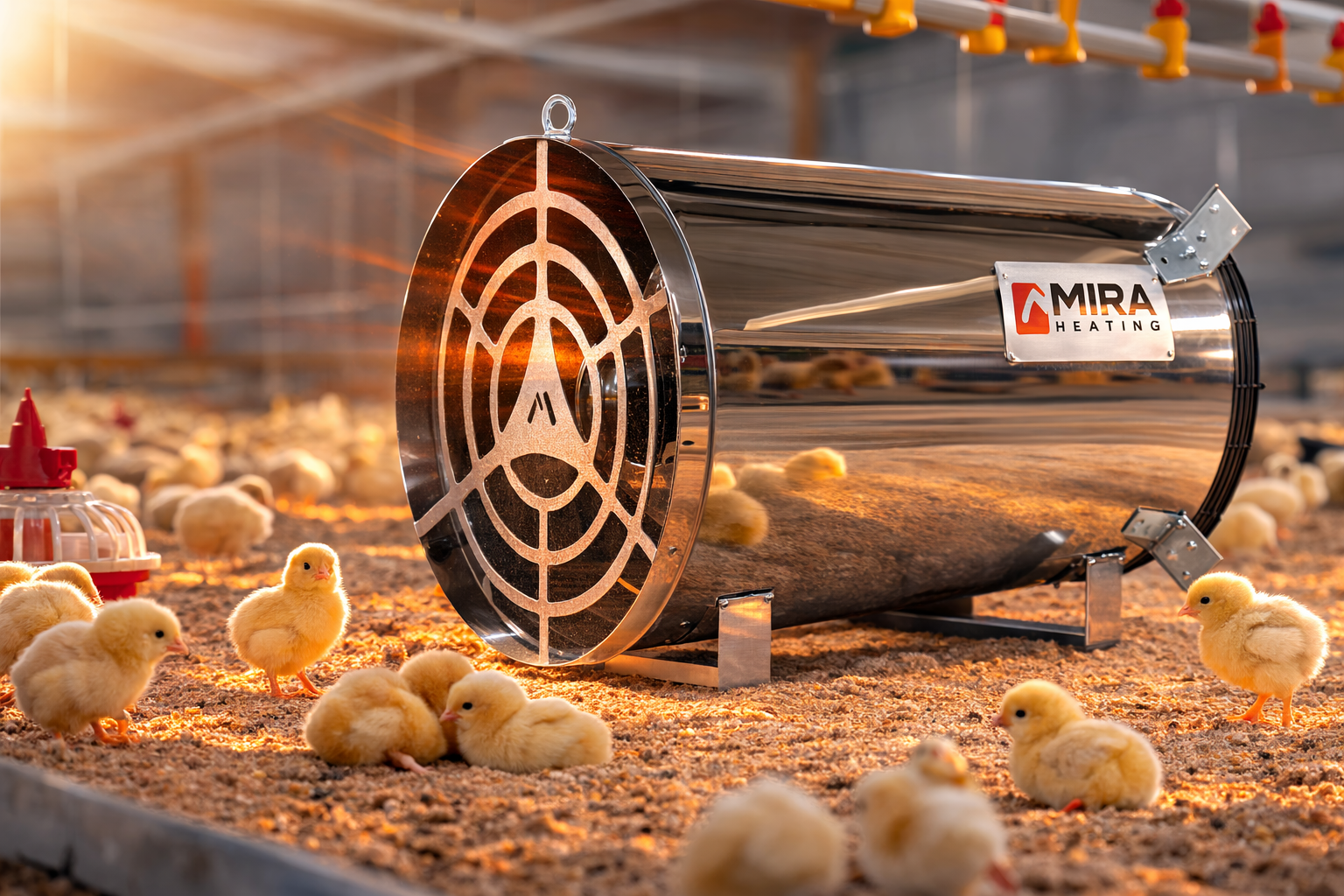
Manufacturers such as Mira Heating provide gas, diesel, and electric forced-air poultry heaters designed for commercial poultry farms worldwide. These systems support stable temperature control, improved bird performance, and reduced energy costs.
Conclusion
Proper heating is a fundamental requirement for successful poultry farming. Maintaining stable temperatures improves bird health, enhances feed efficiency, and supports consistent flock growth.
By investing in reliable and energy-efficient poultry heating systems, poultry producers can optimize farm productivity and ensure sustainable operation.
Looking for a reliable poultry heating solution?
Mira Heating manufactures gas, diesel, and electric forced-air poultry heaters for modern poultry farms. Contact our team to find the right heating system for your operation.