
Common Poultry Heating Mistakes
Common Poultry Heating Mistakes

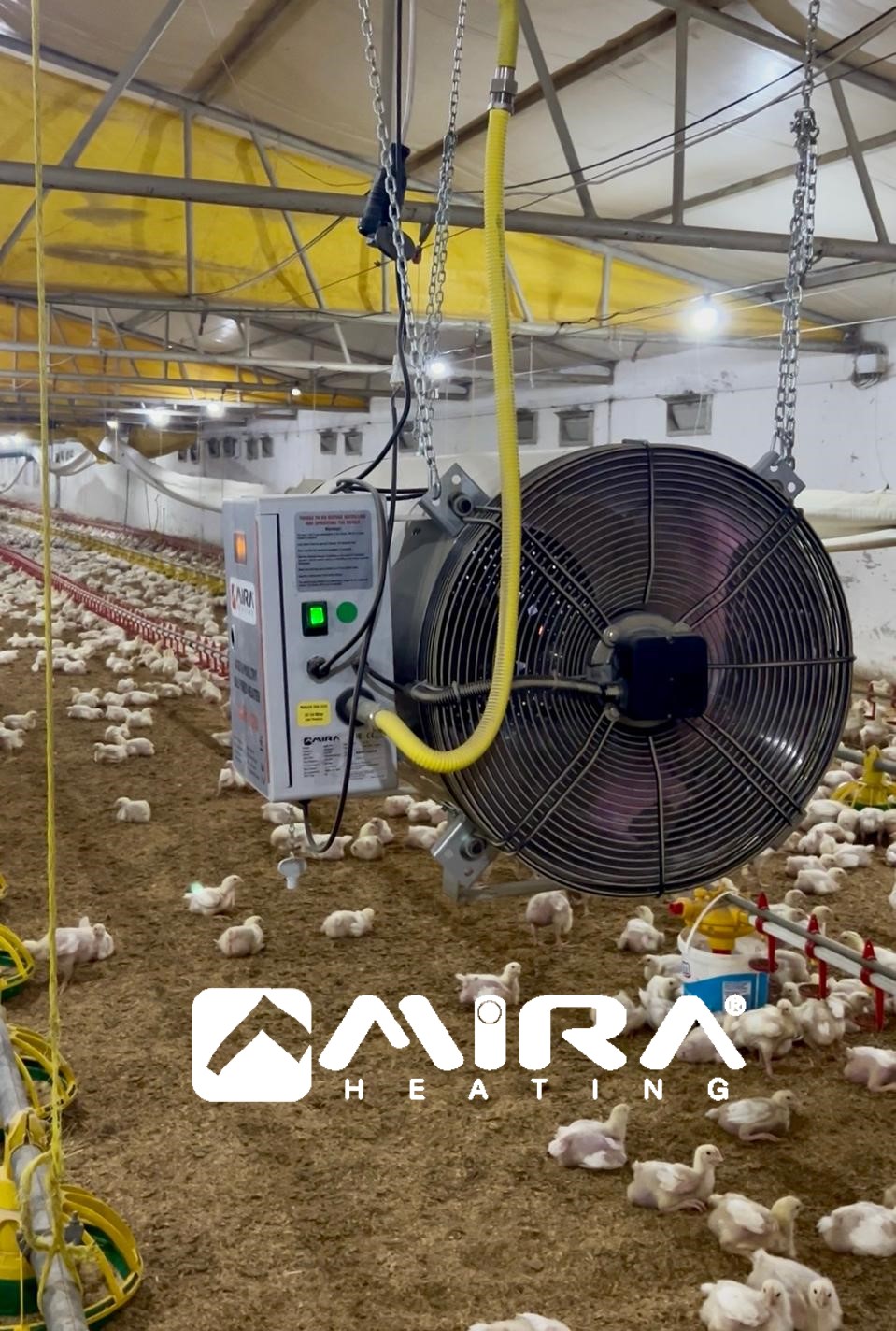
Common Poultry Heating Mistakes and How to Avoid Them
A reliable heating system is essential for maintaining the right environmental conditions in a poultry house, particularly during brooding and cold weather.
However, heating problems are not always caused by the heater itself.
In many poultry houses, inefficient heating is the result of a combination of factors such as poor insulation, incorrect heater placement, inadequate ventilation, inappropriate heating capacity or incorrect temperature control.
A heater may have enough capacity to heat a poultry house, but if the heat is not distributed correctly or if excessive amounts of warm air escape from the building, the system may consume more fuel without providing the desired environment.
Understanding the most common poultry heating mistakes can help producers improve heating efficiency, maintain more uniform temperatures and reduce unnecessary operating costs.
1. Choosing a Heater Without Calculating the Required Heating Capacity
One of the most common mistakes is selecting a poultry heater based only on the size of the building.
Two poultry houses with the same floor area may have completely different heating requirements.
Heating demand depends on several factors, including:
- Poultry house dimensions
- Insulation
- Outdoor design temperature
- Desired indoor temperature
- Ventilation rate
- Air leakage
- Building construction
- Bird age
- Local climate
A heater that is too small may not be able to maintain the required temperature during cold weather.
On the other hand, installing excessive heating capacity without an appropriate control strategy can also create inefficient operation and uneven temperatures.
The heating system should therefore be selected according to the actual heat loss and environmental requirements of the poultry house.
2. Incorrect Heater Placement
Even a high-quality heater can perform poorly if it is installed in the wrong location.
Poor placement can create hot and cold zones within the poultry house.
For example, areas close to the heater may become excessively warm while distant areas remain too cold.
This can cause birds to concentrate in specific parts of the building instead of distributing themselves evenly.
Heater placement should take into account:
- Poultry house dimensions
- Air movement
- Ventilation inlets
- Heater airflow
- Building structure
- Temperature sensor location
- Bird distribution
For forced-air heating systems, the direction and distribution of warm air are particularly important.
We cover this subject in more detail in our guide: https://www.miraheating.com/haber-heater-placement-poultry-houses
3. Ignoring Poultry House Insulation
A heating system cannot compensate efficiently for a building that continuously loses heat.
Poorly insulated roofs, walls, doors and other building components allow heat to escape.
As a result, the heater must operate for longer periods to maintain the desired temperature.
Common sources of heat loss include:
- Poor roof insulation
- Poor wall insulation
- Gaps around doors
- Damaged panels
- Unsealed openings
- Uncontrolled air leakage
Improving insulation can therefore be one of the most effective ways to reduce poultry heating costs.
The objective should always be to reduce heat loss before increasing heating capacity.
4. Confusing Ventilation With Heat Loss
Ventilation is essential for poultry production.
Fresh air is required to control humidity and remove carbon dioxide, ammonia and other unwanted contaminants.
However, uncontrolled ventilation and air leakage can remove significant amounts of heat.
This creates a common dilemma: reducing ventilation may save fuel in the short term, but insufficient ventilation can create poor air quality and an unhealthy environment.
The solution is not to eliminate ventilation.
Instead, fresh air should enter through properly designed air inlets and be distributed correctly throughout the building.
Heating and ventilation should therefore be designed and operated as a single climate management system.
5. Setting the Temperature Too High
Another common mistake is assuming that a warmer poultry house is always better.
This is not the case.
Broiler temperature requirements change as the birds grow.
During the early brooding period, chicks require relatively high temperatures. As they develop, the target temperature can gradually be reduced.
Maintaining unnecessarily high temperatures can:
- Increase fuel consumption
- Increase operating costs
- Reduce heating efficiency
- Create heat stress
- Affect bird behaviour
Temperature should therefore be adjusted according to bird age and actual flock conditions.
For a more detailed explanation of temperature management: https://www.miraheating.com/haber-ideal-temperature-for-broiler-chickens
6. Relying Only on the Thermostat
A thermostat is an important part of a poultry heating system, but it should not be the only source of information.
A temperature sensor measures the temperature at a specific location.
If the sensor is positioned too close to a heater, it may detect a temperature that is significantly higher than the temperature experienced by birds elsewhere in the house.
This can cause the heating system to reduce output even though some areas remain too cold.
For larger poultry houses, temperature should be evaluated at multiple points whenever possible.
Most importantly, temperature readings should be combined with observations of bird behaviour and distribution.
7. Ignoring Bird Behaviour
Birds are one of the best indicators of the conditions inside a poultry house.
If chicks gather tightly underneath a heater, the surrounding temperature may be too low.
If they move far away from the heat source, the temperature may be too high.
If birds concentrate in one particular area, the problem may be:
- Uneven heat distribution
- Drafts
- Poor airflow
- Incorrect heater placement
- Local temperature differences
Ideally, birds should be distributed relatively evenly throughout the available area.
Temperature measurements tell you what the sensor detects.
Bird behaviour tells you what the flock is actually experiencing.
8. Using the Wrong Fuel for the Farm
Natural gas, LPG, diesel and electricity can all be used for poultry heating, but the most appropriate option depends on the farm.
Fuel availability, infrastructure, energy prices and heating requirements vary significantly between countries and regions.
A fuel that is economical in one location may not be the best choice in another.
Poultry producers should therefore consider:
- Fuel price
- Fuel availability
- Heating efficiency
- Infrastructure requirements
- Maintenance
- Equipment investment
- Expected operating hours
The objective should be to select the most appropriate overall heating solution, rather than simply the cheapest fuel.
Natural Gas and LPG Poultry Heating
Natural gas and LPG are widely used in modern poultry heating applications.
Forced-air gas heaters can provide high heating capacity and distribute warm air throughout the poultry house.
Natural gas can be an efficient option where a gas network is available, while LPG can provide a practical alternative where natural gas infrastructure is unavailable.
Mira Heating provides poultry heaters designed for natural gas and LPG applications: https://www.miraheating.com/agh-dogalgazlpgli-kumes-isitici
Diesel Poultry Heating
Diesel heating can be a practical solution for poultry farms where natural gas infrastructure is not available or where diesel is more suitable for the local conditions.
Diesel-fired heaters can provide high heating capacity and rapid heating response.
Mira Heating s diesel-fired heating solutions are designed for agricultural and poultry applications: https://www.miraheating.com/mira-adh-mazotlu-isitici
Electric Poultry Heating
Electric heating can be suitable for smaller poultry houses, specific zones or supplementary heating requirements.
The main consideration is the cost and availability of electricity, particularly for larger poultry farms.
Mira Heating also offers electric fan heaters suitable for poultry and agricultural applications: https://www.miraheating.com/eh-36-elektrikli-fanli-isitici-kumes-sera-isitici
9. Installing the Heater Without Considering Airflow
A forced-air heater does not simply produce heat; it also moves air.
The direction and velocity of that airflow affect how heat is distributed throughout the poultry house.
If warm air is discharged incorrectly, it may:
- Remain concentrated in one area
- Create excessive air movement at bird level
- Fail to reach distant areas
- Interfere with ventilation airflow
The heater should therefore be positioned according to the overall airflow strategy of the building.
This is particularly important in long poultry houses where heat must be distributed over a large distance.
10. Ignoring the Relationship Between Heating and Ventilation
Heating and ventilation must work together.
When ventilation increases, more heat may be removed from the building.
When ventilation decreases, heat may be retained, but humidity and unwanted gases can increase.
This balance is particularly important during cold weather.
A well-designed poultry climate system should provide the required fresh air while minimizing unnecessary heat loss.
The objective is not simply "Keep the poultry house warm." It is "Maintain the required environment while using heating energy efficiently."
11. Failing to Maintain the Heating Equipment
Even a properly designed heating system can lose efficiency if maintenance is neglected.
Depending on the type of heater, regular inspections may include:
- Burner operation
- Gas pressure
- Fuel supply
- Fan operation
- Airflow
- Electrical connections
- Temperature sensors
- Control equipment
- Combustion performance
- Heat exchanger condition
Maintenance problems can reduce heating performance and increase operating costs.
Preventive maintenance is therefore much more valuable than waiting for a heater to fail during a cold production period.
12. Focusing Only on the Heater and Ignoring the Building
A poultry heating system does not operate independently of the building.
The performance of the heater depends on the condition of the poultry house itself.
For example, increasing heater capacity will not necessarily solve a problem caused by:
- Poor insulation
- Excessive air leakage
- Incorrect ventilation
- Poor heater placement
- Incorrect temperature measurement
Before replacing a heating system, the entire poultry house should be evaluated.
Sometimes the most effective solution is not a larger heater but a better-controlled environment.
How to Avoid Common Poultry Heating Problems
A practical approach is to evaluate the poultry house as a complete system.
Before installing or upgrading a heating system, consider:
- Heating capacity — Calculate the required heating power based on building dimensions, insulation, outdoor conditions and ventilation.
- Fuel — Compare natural gas, LPG, diesel and electricity according to local availability and operating costs.
- Insulation — Identify and eliminate unnecessary heat loss.
- Heater placement — Plan heater locations according to building dimensions and airflow.
- Ventilation — Ensure that fresh air enters through controlled inlets without creating excessive drafts.
- Temperature control — Use appropriately positioned sensors and adjust temperature according to bird age.
- Bird behaviour — Monitor the flock distribution as an additional indicator of environmental conditions.
- Maintenance — Keep heating equipment clean, correctly adjusted and regularly inspected.
A Heating System Should Be Designed as Part of the Whole Poultry House
The most important lesson is that poultry heating efficiency cannot be determined by looking at the heater alone.
A good heating system is the result of several components working together:
Insulation + Heating + Ventilation + Airflow + Temperature Control + Management
If one of these elements is poorly designed, the overall system can become inefficient.
This is why selecting a heating system should begin with understanding the poultry house rather than simply selecting a heater from a catalogue.
Conclusion
Common poultry heating problems are often caused by the interaction between the heating system, the building and the ventilation strategy.
The most frequent mistakes include:
- Incorrect heating capacity
- Poor heater placement
- Insufficient insulation
- Uncontrolled air leakage
- Excessive temperature settings
- Incorrect sensor positioning
- Ignoring bird behaviour
- Choosing fuel without evaluating total operating cost
- Poor airflow management
- Insufficient maintenance
Avoiding these mistakes can help poultry farms create a more stable environment while reducing unnecessary energy consumption.
Whether a farm uses natural gas, LPG, diesel or electric heating, the heating system should be selected and installed according to the actual requirements of the poultry house.
At Mira Heating, we develop heating solutions for poultry farms based on different fuel options and application requirements. If you are planning a new poultry house, replacing an existing heating system or experiencing uneven temperature and high heating costs, contact our team and share your poultry house dimensions, location and heating requirements. We can help you evaluate the appropriate heating solution for your application.